I Earned My PT1 Certification from TryHackMe 🎉
Search for a command to run...
In this series we are going to have a broad of knowledge on some networking concepts need to pursing a career in cyber security or offensive security
🚀 Introduction Becoming an offensive security professional is not about shortcuts — it’s about building a strong foundation and mastering the basics. Like many others, I started by exploring everythi
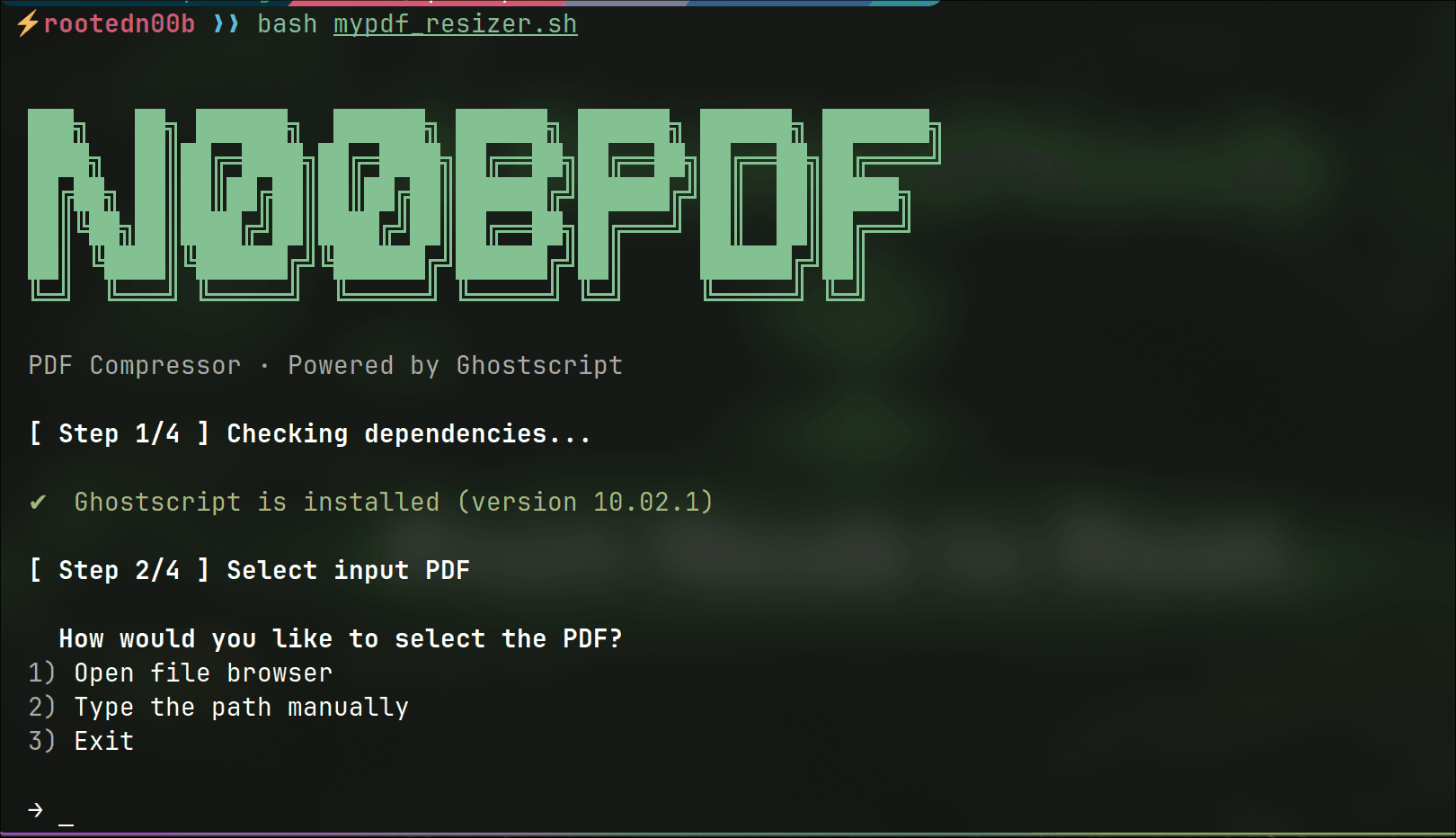
If you've ever tried to email a PDF only to get bounced back with a "file too large" error, you know the frustration. Online PDF compressors exist, but most of them upload your files to someone else's
Core Skills for IT Technicians, Network Engineers, Defenders & Pentesters Introduction Every system tells a story.Not in logs.Not in dashboards.But on the wire. Every login, every file transfer, every scan, every misconfiguration — legitimate or mal...

🧩 How to Configure VoIP on a Zyxel Switch with Grandstream Phones Using a Voice VLAN In today’s networks, Voice over IP (VoIP) has become a core communication service for both businesses and labs. To ensure call quality and reduce network interferen...

A Quick Thank You Before diving in, a huge thanks to the offensive security community — from the creators of tools and labs to everyone sharing knowledge daily. Without this spirit of collaboration, many of us wouldn’t have learned how deep and fasci...

Imagine popping open a fresh, fully-configured pentest environment in seconds — with every tool you need, zero dependency hell, and the confidence that your host stays clean. That’s the promise Exegol delivers: not another clunky distro to install an...
On this page
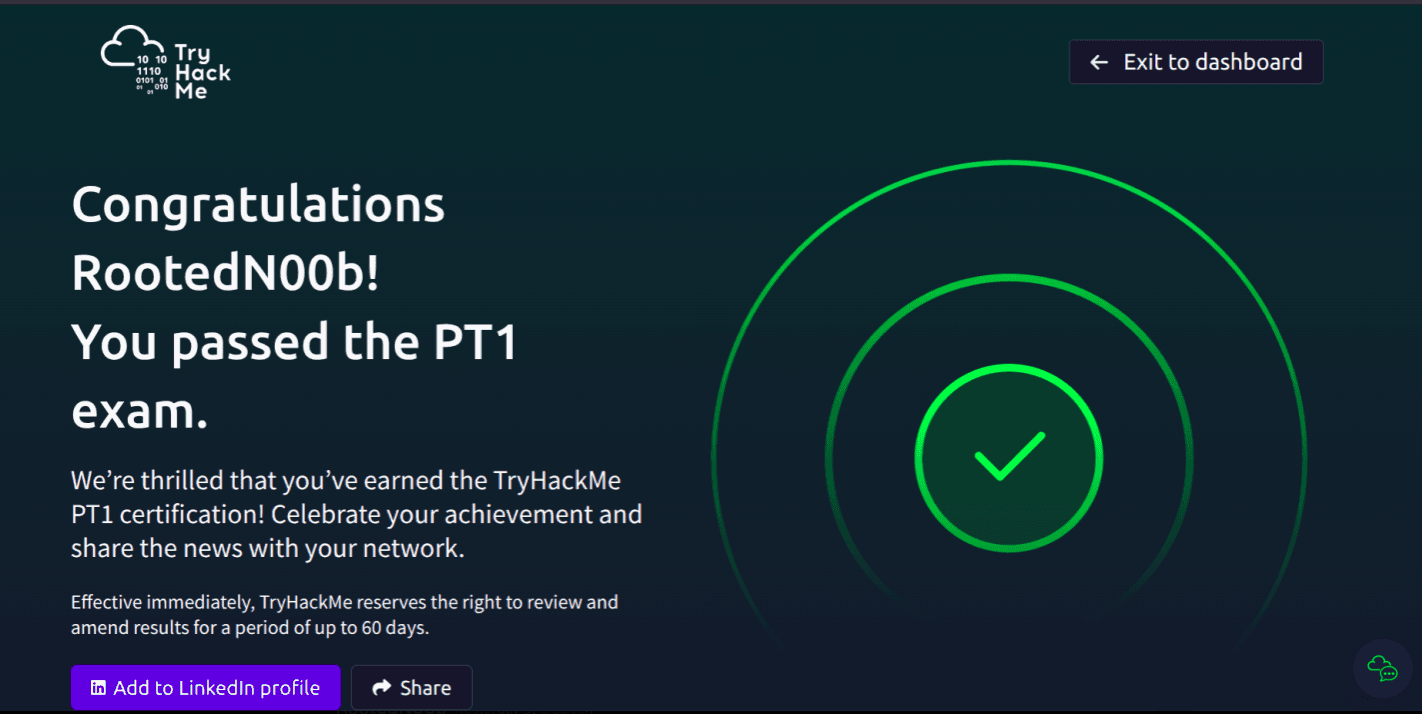
I’m excited to share that I’ve officially achieved the PT1 (Penetration Tester Level 1) Certification from TryHackMe! This milestone marks an important step in my journey into cybersecurity and penetration testing, and I want to take a moment to reflect on what it means and how I got here.
The PT1 is an entry-level penetration testing certification offered by TryHackMe. It’s designed to validate foundational skills in ethical hacking and cybersecurity. Unlike multiple-choice exams, the PT1 is hands-on: you’re dropped into a practical environment where you must enumerate, exploit, escalate, and prove your skills in real-world-style scenarios.
It’s not about theory—it’s about doing.
Key areas covered include:
Enumeration & Reconnaissance
Web Application Attacks
Privilege Escalation
Password Cracking & Exploitation
Report Writing & Documentation
Attacking Active Directory
Remediation step to recover each exploited vulnerability
I started studying penetration testing through TryHackMe’s guided learning paths. What I loved most about TryHackMe is how it turns complex topics into interactive labs where you learn by breaking, fixing, and exploring systems yourself.
Some of the skills I strengthened along the way:
Using tools like Nmap, Gobuster, Hashcat, and Burp Suite for reconnaissance and exploitation.
Understanding how misconfigurations lead to privilege escalation.
Practicing persistence and creative problem-solving when the “obvious” path didn’t work.
Writing reports clearly and effectively, which is often overlooked but just as important as hacking itself.
The PT1 exam was challenging, specially the web part of the exam but in the best way possible. It tested not only my technical skills but also my ability to think critically under pressure. I had to carefully enumerate the target, try different approaches, and stay organized while taking notes and screenshots for my final report.
This was a great reminder that penetration testing is not just about tools—it’s about mindset.
Achieving the PT1 certification means more than just a badge to add to my profile. It’s proof that I can approach a system like a penetration tester, find vulnerabilities, and demonstrate them responsibly.
It also motivates me to keep pushing further. PT1 is just the beginning—I plan to continue sharpening my skills with more advanced certifications, homelab projects, and real-world practice.
Building out my homelab to simulate real enterprise environments.
Diving deeper into Active Directory attacks and defenses.
Preparing for more advanced certifications, like OSCP, CPTS, CAPE.
Sharing my journey and projects here on my blog and on my Github Projects.
If you are a beginner I would recommend to follow the Tryhackme’s recommended Learning path to get ready for the exam.
Tryhackme Recommended Learning path
If you have previous Hacking experience from certifications like : TCM Security PJPT, PNPT or eLearnSecurity (eJPTv2)
I would recommend to follow this short path
[ ] https://tryhackme.com/room/owasptop102021
[ ] https://tryhackme.com/room/sqlfundamentals
[ ] https://tryhackme.com/room/sqlmapthebasics
[ ] https://tryhackme.com/room/raceconditionsattacks
[ ] https://tryhackme.com/room/sqlinjectionlm
[ ] https://tryhackme.com/room/xss
[ ] https://tryhackme.com/room/axss
[ ] https://tryhackme.com/room/dombasedattacks
[ ] https://tryhackme.com/room/writingpentestreports
Certification link: https://tryhackme.com/certification/junior-penetration-tester
I’m proud to have earned the PT1 certification, but this is just one step in a much larger journey. Cybersecurity is a field where learning never stops, and I’m excited to keep growing.
If you’re starting out and wondering whether to pursue PT1: do it. It’s beginner-friendly, practical, and a confidence booster for anyone serious about penetration testing.
Stay tuned for more write-ups, projects, and lessons I’ll be sharing along the way. 🚀
I would like to take a moment to say thank you to some people who are always in some how pushing me in that endless journey of penetration testing

Exam link: Tryhackme PT1