

Why Every Hacker Needs to Understand Kerberos Attacks

Search for a command to run...
No comments yet. Be the first to comment.
In this series we are going to have a broad of knowledge on some networking concepts need to pursing a career in cyber security or offensive security
I’m excited to share that I’ve officially achieved the PT1 (Penetration Tester Level 1) Certification from TryHackMe! This milestone marks an important step in my journey into cybersecurity and penetration testing, and I want to take a moment to refl...
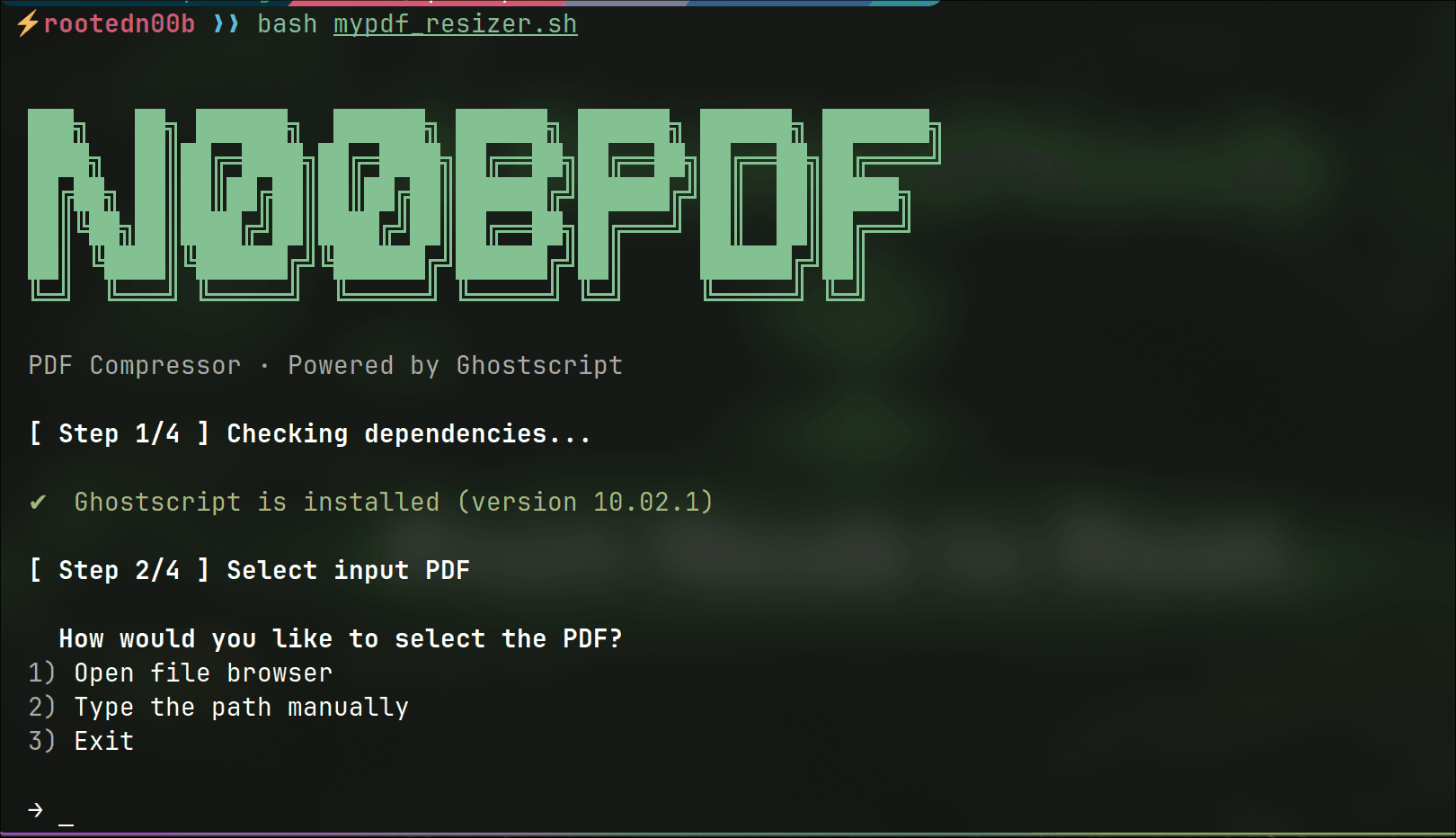
If you've ever tried to email a PDF only to get bounced back with a "file too large" error, you know the frustration. Online PDF compressors exist, but most of them upload your files to someone else's
Core Skills for IT Technicians, Network Engineers, Defenders & Pentesters Introduction Every system tells a story.Not in logs.Not in dashboards.But on the wire. Every login, every file transfer, every scan, every misconfiguration — legitimate or mal...

🧩 How to Configure VoIP on a Zyxel Switch with Grandstream Phones Using a Voice VLAN In today’s networks, Voice over IP (VoIP) has become a core communication service for both businesses and labs. To ensure call quality and reduce network interferen...

Imagine popping open a fresh, fully-configured pentest environment in seconds — with every tool you need, zero dependency hell, and the confidence that your host stays clean. That’s the promise Exegol delivers: not another clunky distro to install an...
Before diving in, a huge thanks to the offensive security community — from the creators of tools and labs to everyone sharing knowledge daily. Without this spirit of collaboration, many of us wouldn’t have learned how deep and fascinating Active Directory attacks really are.
If you’ve ever compromised a Windows environment, you’ve probably crossed paths with Kerberos — even if you didn’t notice it. It’s the invisible bouncer controlling who gets in, who stays out, and who can access which part of the building.
Kerberos is not just another protocol. It’s the heart of authentication in modern Windows Active Directory environments — the same environments that power corporations, schools, and governments.
And that’s exactly why understanding Kerberos attacks is non-negotiable for anyone serious about hacking, red teaming, or defending enterprise networks.
At its core, Kerberos is an authentication protocol that uses tickets instead of passwords to verify identities.
Think of it like this:
When you log in, Kerberos gives you a ticket proving who you are.
That ticket lets you access services (like file shares or databases) without typing your password again.
Everything runs smoothly — until an attacker learns how to forge, steal, or manipulate those tickets.
Once you master that concept, you’re not just playing with exploits anymore — you’re speaking the language of enterprise security.

Kerberos attacks are so powerful because they target the core trust mechanism of Windows networks. Once compromised, attackers can move laterally, escalate privileges, and even impersonate domain administrators.
Here’s what makes it so interesting:
Stealth: Most Kerberos-based attacks don’t trigger antivirus or EDR alerts.
Privilege Escalation: Once you own a ticket, you own access — sometimes domain-wide.
Persistence: Forged tickets can last hours or even days, giving long-term control.
Here’s a breakdown of the attacks every hacker and red teamer should understand — from the simplest to the most advanced.
A recon-level attack where the attacker brute-forces usernames against Kerberos to discover valid accounts. It’s fast, silent, and forms the basis for targeted attacks later.
When users don’t require pre-authentication, attackers can request encrypted data and crack it offline to recover passwords. A simple misconfiguration — a big door wide open.
One of the classics. Attackers request service tickets (TGS) for service accounts, extract them, and crack them offline to reveal plaintext passwords — often with domain-level privileges.
Instead of stealing passwords, attackers steal tickets directly from memory (like mimikatz sekurlsa::tickets). They then reuse them to impersonate legitimate users.
The ultimate weapon. By compromising the KRBTGT account (the key to the entire kingdom), attackers can forge any ticket — even for accounts that don’t exist. Complete domain dominance.
A quieter alternative — forged for a single service instead of the entire domain. It’s harder to detect and perfect for maintaining access under the radar.
If you’re just starting your offensive security journey, Kerberos might sound intimidating — but learning it early changes everything.
Understanding Kerberos attacks helps you:
Grasp how Windows authentication truly works.
Understand lateral movement and privilege escalation.
Transition smoothly into Active Directory Red Teaming.
Build a stronger foundation for advanced certs like CRTP, CRTO, or PNPT.
Even if you only play in labs like TryHackMe, HackTheBox, or PortSwigger Academy, you’ll notice Kerberos scenarios everywhere. That’s because it’s one of the most realistic attack surfaces you can simulate.
For professional red teamers, Kerberos attacks are more than just tricks — they’re tools of strategy.
Advanced operators chain Kerberos abuse with:
BloodHound for relationship mapping
Impacket for remote execution (GetUserSPNs.py, psexec.py)
Cobalt Strike / Sliver for ticket impersonation
PowerView / Rubeus for in-memory attacks
And defenders who understand these attacks can implement better mitigations — from enforcing pre-authentication to monitoring unusual ticket requests in SIEM.
You don’t need a corporate network to get started.
You can build a mini Active Directory lab in Proxmox, Hyper-V, or even VirtualBox and reproduce these attacks step by step.
Try platforms like:
These resources let you practice real attacks without crossing ethical boundaries.
If you’re blue teaming, Kerberos knowledge is equally crucial.
Knowing how attackers manipulate tickets helps you detect and respond faster.
Here’s how:
Enable Kerberos pre-authentication for all users.
Rotate service account passwords regularly.
Monitor Event IDs 4768–4771 for anomalies.
Implement tiered administration and LSA protection.
Kerberos isn’t just an authentication protocol — it’s a battlefield.
Whether you’re a beginner trying your first lab or a red teamer executing lateral movement in a mature network, understanding Kerberos gives you x-ray vision into how trust and access really work inside Windows environments.
So don’t just learn the tools — learn the system.
Because the hacker who truly understands Kerberos…
owns the network before even launching an exploit.
Further Reading & Practice

